
White Stack & Island Zawn
 5 minutes
 Morning sun
 White granite, 10-25m
Introduction
White Stack, Island Zawn and Big Zawn are the prominent cliffs further down the track from Lassies Wall. Abseil access is standard for these area. Read the access descriptions for each area for further details.
White Stack
White Stack is the second large outcrop south of Lassie's Wall. Access is approximately 150m past the track that leads down to Lassie's Wall. Looking south from White Stack the only decent piece of rock is the Sentry Box, 200 m away, and just north of the stack you can see Island Zawn with the detached buttress of the island standing in it.
The White Stack area comprises lower (sea level), middle and upper buttresses, between which are broad ledges.
To access, head out to the buttress from the track and carefully scramble down and around its left side from the summit (looking out to sea). You can carefully climb up to the ledge system from here - don't fall! Alternatively, you can abseil in from the very top, or by squeezing through the back of the wide crack at the base of Roaring Forties. Access to the lower cliffs is easiest by abseil from this middle ledge.
Island Zawn and Big Zawn are the next two areas north of White Stack, leading to Lassie's Wall.
White Stack - Upper Tier
The first routes are on the southeast face of the Upper Tier. Access by abseiling south off the highest point of the Stack.
Sustained hand and fist crack corner on the south side of the upper tier. Access by abseiling down the line to a large sloping ledge from the South-East point of White Stack using trad gear. There is a rocking, chocked block at the top of the line, but it is keyed-in and multiple attempts to remove it over the years have failed.
Thomas, John Fantini, Ben Maddison, 1980
Again on the south facing wall at the highest point of the stack, a few metres right of Windjammer, climb a very wide but straightforward offwidth (2 x No. 6 Friends useful) to thin, not well protected climbing, left of the sharp arete of Silent Running.
Simon Young and Garry Phillips 2006
From the very top of the stack abseil eastwards 30m to bushy ledges. Climb a straightforward hand crack to a sharp layback arete with 5 U bolts.
Nick & Heather Hancock, Dec 2010.
Directly below Windjammer and gained by a 50m abseil southwards from the top of the stack, is a highly featured wall in a spectacular position. Climb up left from a bolt belay in an alcove, to follow 6 U bolts via great moves to an easy slab. Belay on gear here and finish up either of the Silent routes.
Nick & Heather Hancock, Dec 2010.
These climbs are also on the upper buttress, but on the north east face. They start above the finish of the Mithras.
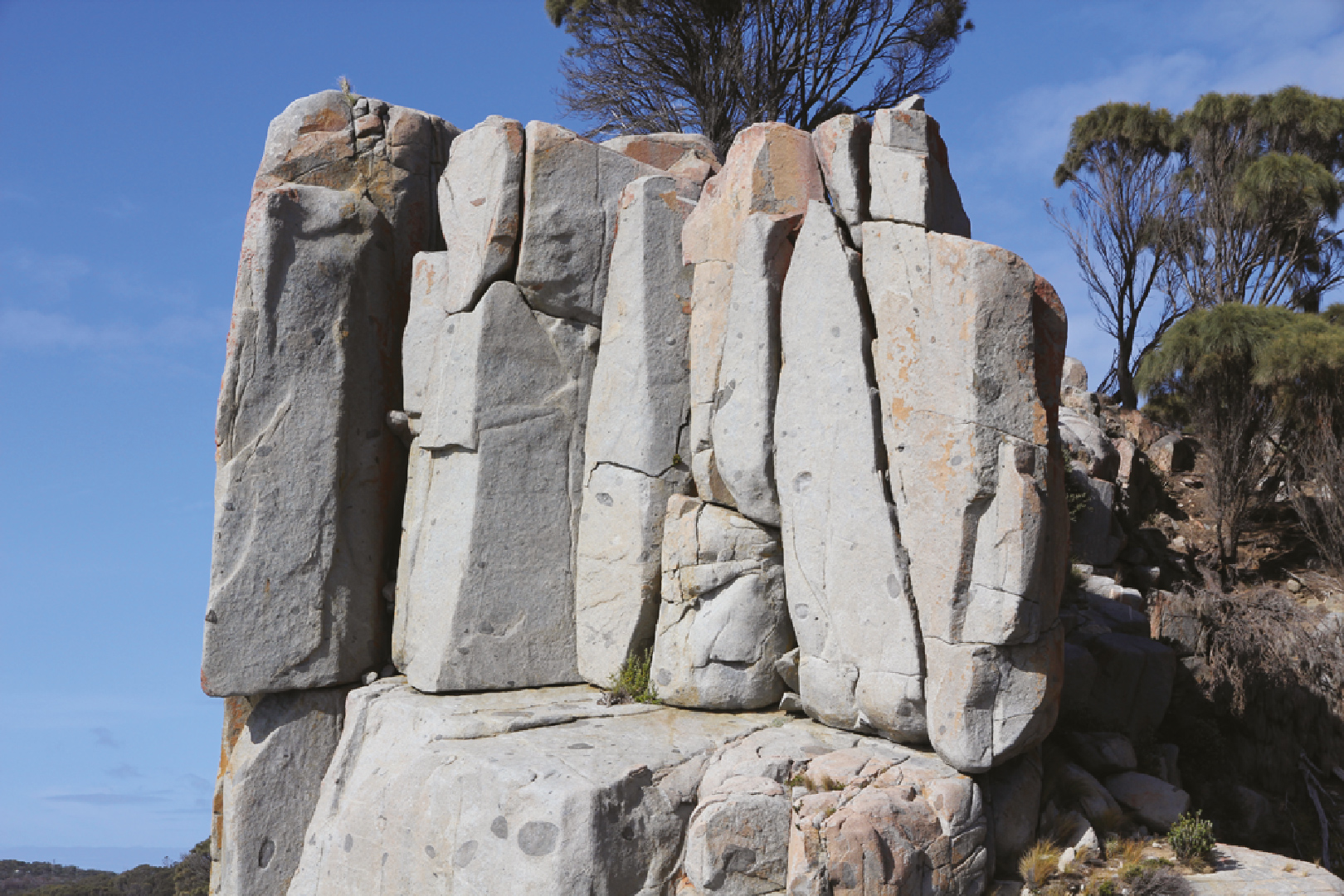
White Stack Upper
Bouldery and slightly reach dependant movement to some great and aesthetic arete climbing.
Originally bolted with non-stainless hardware, leaving rust stains and making it unclimbable. Tidied up and rebolted, with one extra, with permission from Dave in 2022.
Please always use 316 stainless steel bolts on sea cliffs.
Dave Jones, Gordon Poultney, Feb 1995. Bolted by Sumon Carter. Rebolted by Alex Hartshorne 2022.
The corner crack on the left.
N.Deka, R.Hamilton, 1981.
The crack with the bush at the base. Up this offwidth (crux) to the ledge, continue up the chimney which has two corner cracks in the back. Layback option, good gear, nice moves, easy to throw a top-rope down; great option for learning crack.
Chris Lang, Madi Rosevear, July 2020
The crack 1m left of RF. Climb the block to gain the base of a rightward slanting the hand crack. Climb the widening crack on good hand and fist jams. Near the top it is possible to step right to a good foothold on RF or finish directly up the crack. Large cams (4 and 5 camalots) helpful.
Rob Hardy 2017
The companion route to Fishcake and 4m to its right.
R.McMahon, N.Smith, J.Richardson, 1981.
The leftward trending diagonal on the right face. Take a #4.
R.Hamilton, A.Crowd, 1981.
This is the arête on the right of the ledge, you would have passed under it when you scrambled around. The route follows the arête and scoopy feature to its left. The gear is not great, but probably OK. Small cams in the horizontal after the first few moves and a wire low and right. The crux is standing into the corner and reaching the ledge.
Nick Hancock, Andrew Bissett, Jul 2000.
You carried the big gear this far - may as well?
The right trending fist crack faced before starting the scramble to White Stack Upper. Actually the same crack as Tashtego, but on the far side of the rock. When you reach the top of the wide fist crack, head left and up past the bush to top out.
Climbs better then it looks, 2x 4s or 5s recommended, grade may vary depending on the size of your mitts.
Chris Lang, Nov 2023
White Stack - Middle Tier
Most of the climbs are on the Middle Tier.
These next routes are on the east face. They can be identified by first locating Mithras, a strong roof bound crack lined with bolted routes on either side. These can be accessed via abseil from the bolts located on the buttress between Kodak Tart and Fishcake.
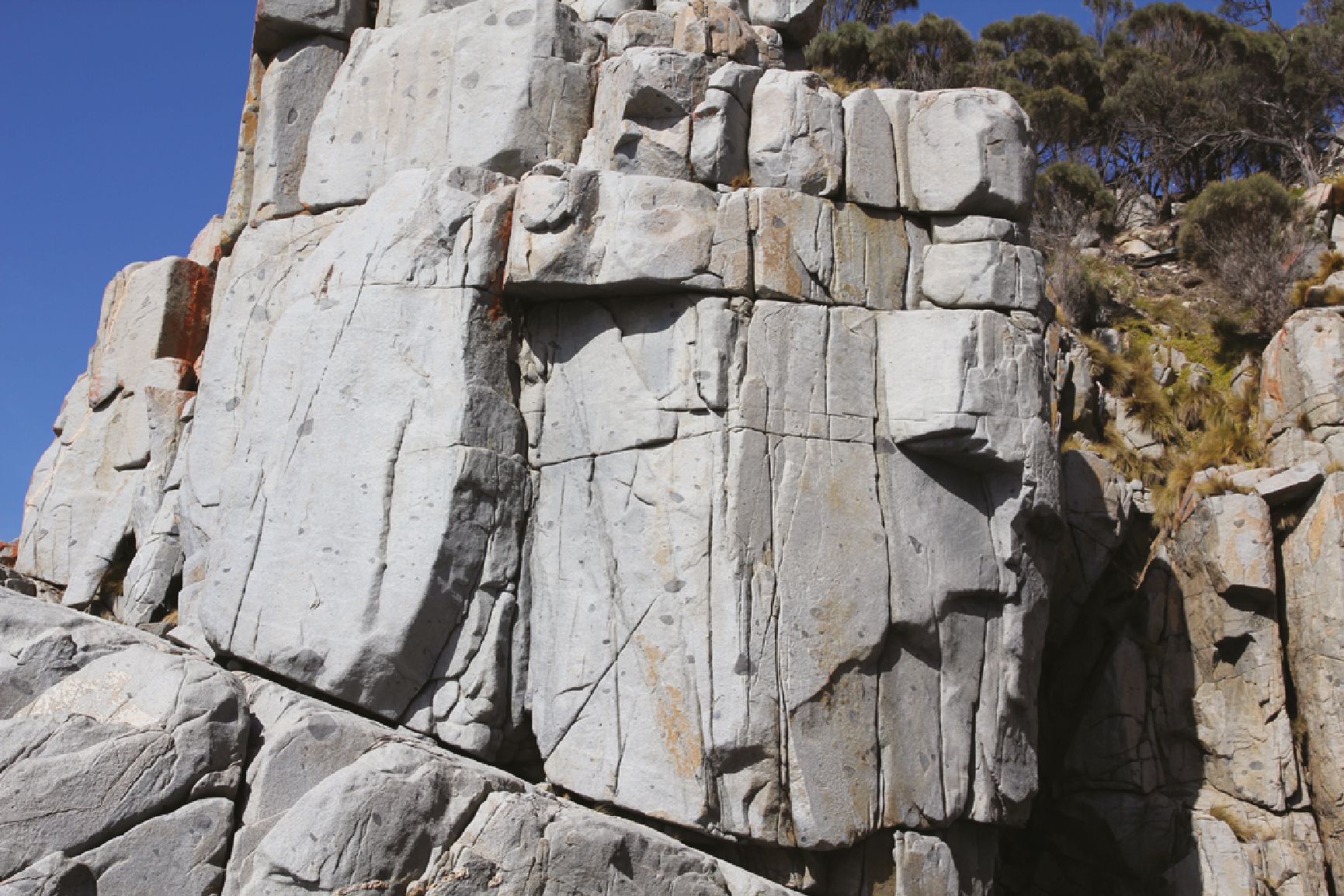
White Stack Middle
The cracks to the left of the smooth white face which faces east. Climb easily up the wide cracks to gain the chimney. Up this and traverse awkwardly right at its top to finish (there is a variant finish out left by Stephenson and Deka, 1989).
K.Bischoff, R.McMahon, 1980.
The leaning offwidth corner immediately to the right of the smooth white face.
Ben Maddison, John Fantini, 1980.
Up broken seam past 3 bolt runners two lines left of Mithras. The route can apparently be climbed at grade 25 by using the lefthand arête.
Dave Jones, Gordon Poultney, Feb 1995.
The face route immediately left of Mithras with 3 carrot bolts, thoughtful and tricky slab face climbing. The route starts in the middle of the sub-buttress then heads right to the first bolt. Bolts are a bit weirdly placed, pre-equipping them is a good idea.
E.Peacock, S.Ford, C.Reid, Dec 1991.
The classic hand-jamming corner off the main ledge, passing the roof on the left.
R.McMahon, K.Lockwood, I.Thomas, 1980.
The face right of Mithras. A small camming device protects the bottom moves, followed by 2 bolts then more natural pro. Quite exciting pulling through the roof.
E.Peacock, S.Ford, Dec 1991.
The first prominent line on the north face near the arete. A very technical and strenuous finger crack (crux), is followed by classic easier climbing up the prominent flake to the top.
Simon Parsons, Nick Deka, Phil Bigg, 1981.
Just right of White Sail is a splitter hand crack with a rather inconvenient bulge at one third height. Strenuous, flared and under-graded. Take some micro-cams.
Simon Parsons, Phil Bigg, Doug Fife, 1982.
Stupendous. Nick had to strike a deal with a daeity to get a belay and second for this climb. From the end of the ledge (a few meters right of Eskimo Sun Park) hand traverse right for a few meters to enter the bottomless crack. Follow this up past an overlap and into a corner beside a roof. After sneaking a rest head out right past the roof and snatch for the jug. Mantle onto the jug, take a few breaths and proceed up the pleasant wall to finish. A key black alien at the lip of the roof protects the runout through this easier climbing. A fine, strenuous route with good protection (000-3 friend, no wires needed).
Nick Hancock, Andrew Bissett, Jul 2000.
White Stack - Lower Tier
These routes are on the lower tier.
The crack rising fron the sea, reached by abseiling from the south end of the lower platform (about 10m south of Holiday in Bulimia) to a pedestal in calm conditions.
Robert McMahon, John Fisher, Mar 1995.
The next three climbs are on a wall starting at sea-level (below a region between 5-15m north of the base of Holiday in Bulimia).
The straight hand-crack starting from a hanging belay at water level. Abseil in.
Roger Parkyn, Nick Hancock, Aug 2002.
On the lowest tier directly below Of Jellyfish and Men, climb the crack starting above a sea-washed triangular stance, to a tricky swing left to gain the continuation up The Path of Righteousness.
Nick Hancock, Roger Parkyn, Aug 2002.
The flaring crack a few metres right leads to bold moves up left to a big jug and creative protection. Make a balancy step up to gain a flake and an easier finish.
Nick Hancock, Roger Parkyn, Aug 2002.
The Blunt arete to the right of God Ain't Watching. Shapely holds lead to a technical compression crux which requires some cooler conditions. 3 carrots. Hangers and draws can be placed easily when rapping in.
Simon Bischoff and Alex Hartshorne August 2021
The next climbs are also on the lower tier but are further north.
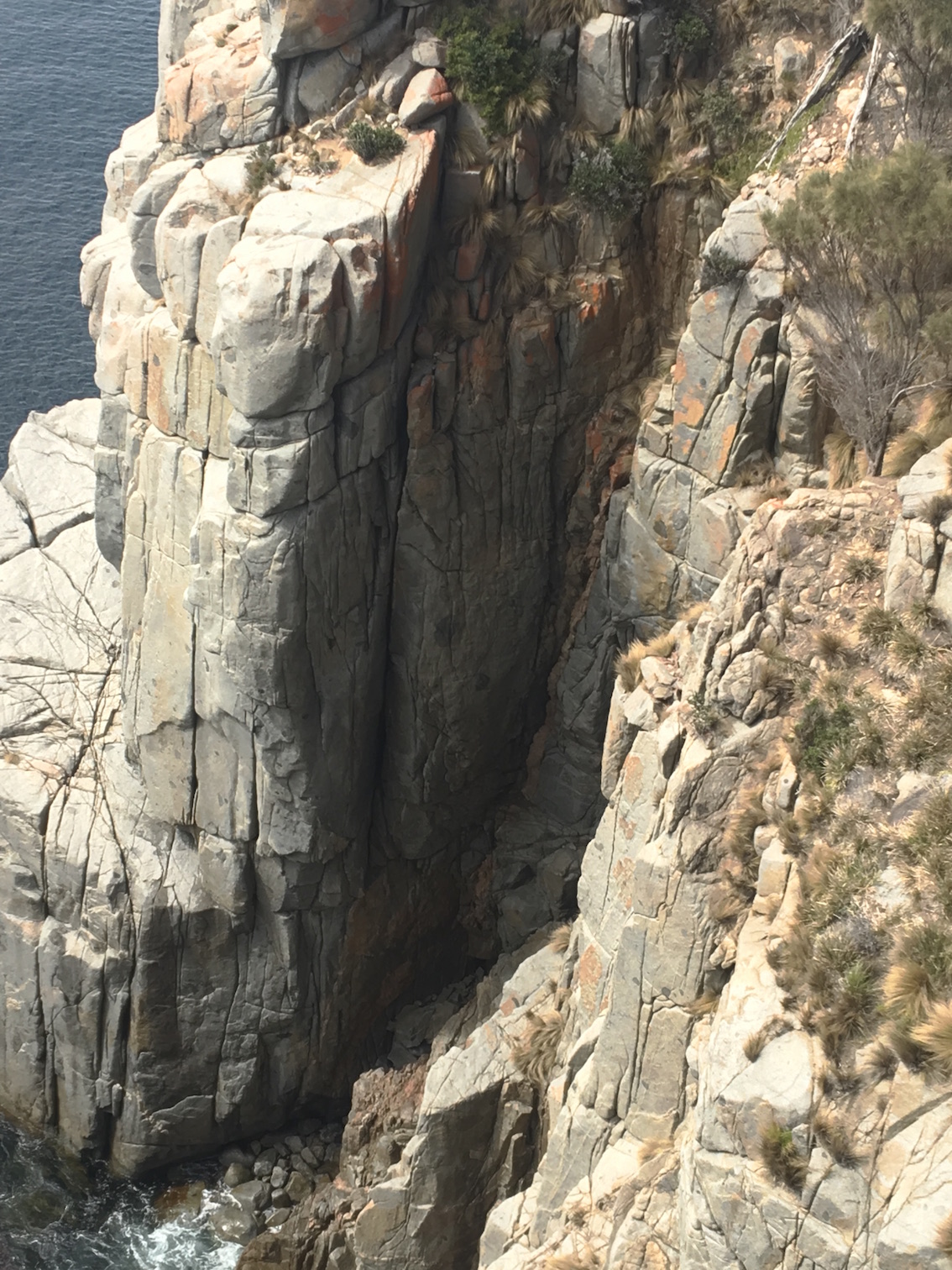
The Darkside
Directly below Eskimo Sun Park.
K.Lockwood, I.Thomas, R.McMahon, 1980.
This climb ascends the high hanging wall on the north west tip of the stack. Abseil from below Return to Normality, to belay on a ledge a few metres above the boulder beach. Step across the gap and climb a groove to a short traverse right. Move up past a glued carrot bolt to a break, then swing left to a jug. Follow the hard sequency wall above past 3 more glued carrots and then layback cracks leading to the top. Friends from 1 to 3.5, with triples in the smaller sizes, and 4 brackets.
Nick & Heather Hancock, Dec 2010.
The gritty awkward offwidth corner in the cleft around the corner to the right. Access by abseil.
Ben Maddison, John Fantini, 1980.
There are a number of climbs in Island Zawn behind the island and around towards the base of White Stack. The next two routes are on the stepped buttress just right of the gulch separating White Stack. They make nice exit routes after climbing on the island.
The strong corner 5m right of the deep cleft topped by piled rubble.
Robert McMahon, 1980.
Finishes up the prow 4m right of Boanthropy.
Robert McMahon, 1980.
Island Zawn
The usual access is by abseil (22m). Head out on the promontory between Big Zawn and Island Zawn, on the Island side is a large solid looking tree 10 m down from the crest. Please put a sling and karabiner round the tree, you can recover it when you climb out. To get to Harpic bliss and POTAI you walk to the very end of this promontory and abseil in off u-bolt anchor to ledge above sea.
Whilst the gully near the abseil line has been used as a scrambling exit from the zawn, it is highly recommend you don't do this unless you want to become one with the soil, vegetation and rocks. Use one of the exit routes listed below or jug back up your rap-line.
Behind Island Zawn
These routes are located on the face behind island zawn, near where you abseil in.
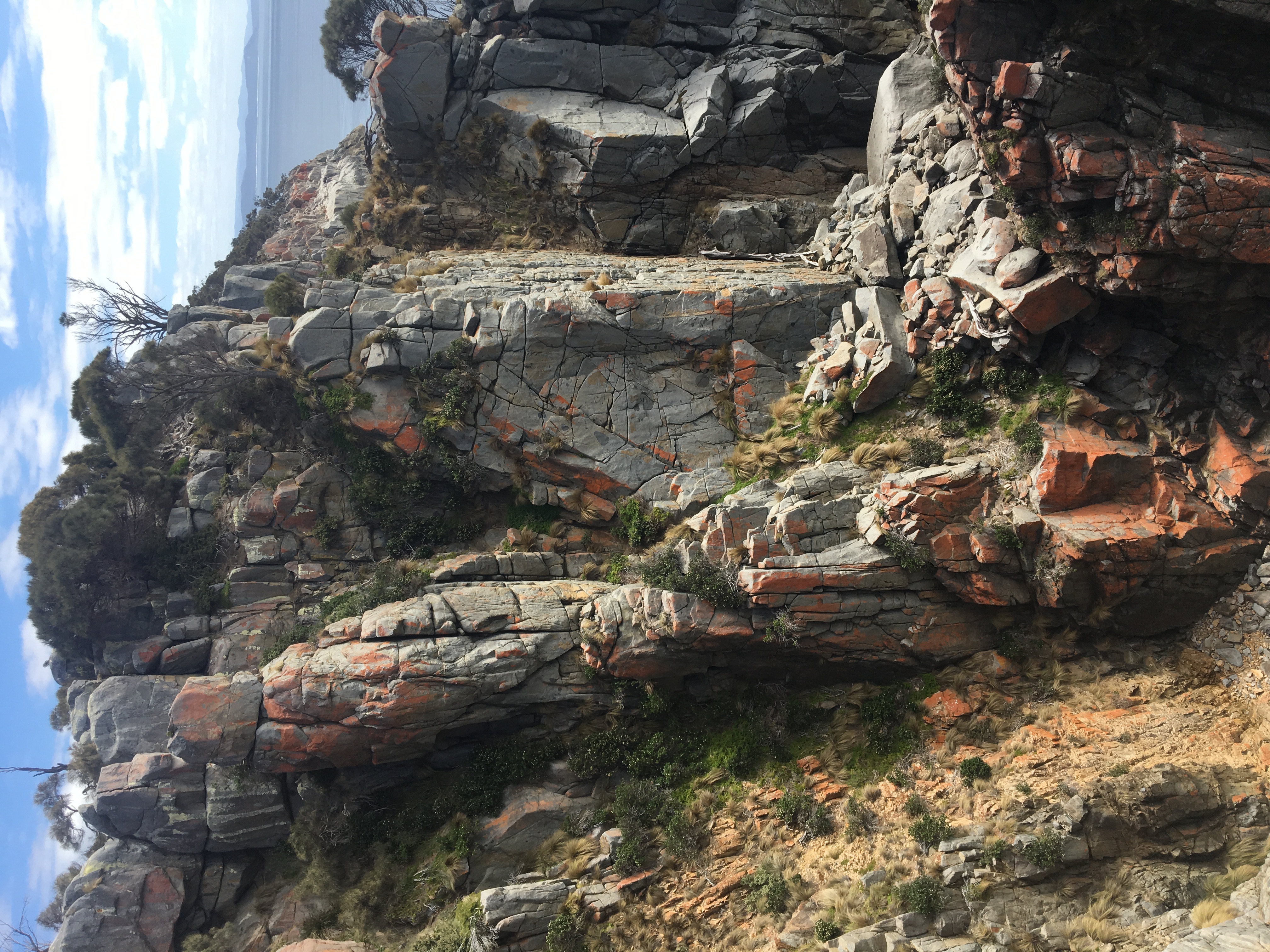
Flying V Buttress - Behind Island Zawn
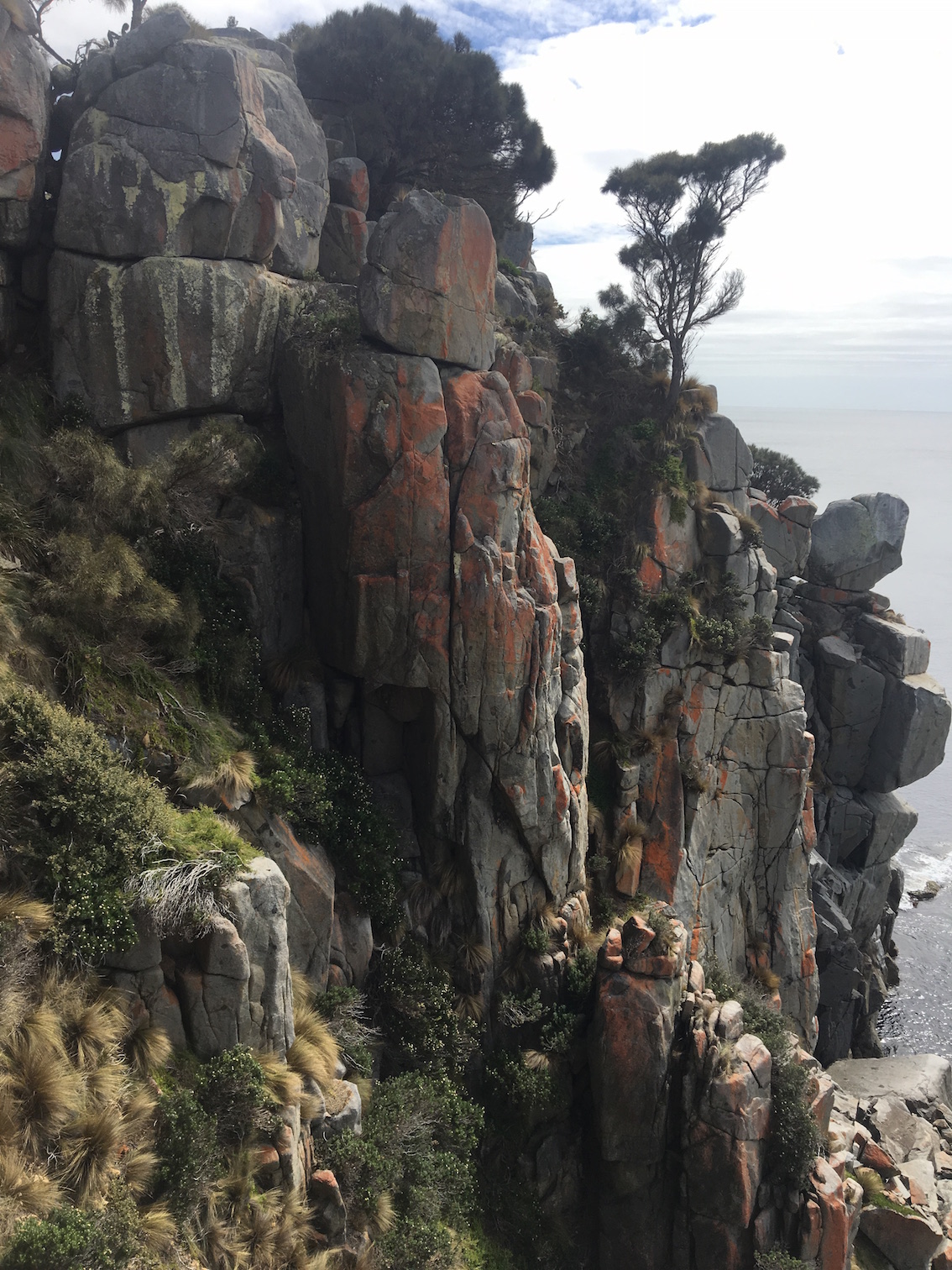
Narcolepsy and Pipeline
Climb the strong leftwards diagonal up to the bulging crack, and up this to the top.
John Fantini, Ben Maddison, 1980.
Climb the obvious arête behind Island Zawn, the arête left of 'A Nice day for Kicking Goals'.
Kim Robinson, John Forcett 1997
Downhill and 25m right of Narcolepsy on the left side of a wide broken face. Stay a metre or two right of the arete and a metre or two left of the break in the face.
Ben Maddison, Robert McMahon, 1979.
Two metres right of ANDFKG is a break in the face. Loose Possums starts in the crack a further 2 metres right. Avoid the gully high up by climbing the rib on the right. Worthless.
Dave Gardner, A.Holden, Jul 1990.
Two metres right of Loose Possums is another crack. Up this, then at one third's height take the thin right trending crack to the top.
B Baxter and H Smith, May 2008.
The next climbs are on the buttress that starts level with the northern end of the island.
The basis of this climb is a fine curving off-width corner high up on the buttress.Start on the boulders at the base of the cliff below the crack. Ascend short steep face trending right to gain the corner and straight up this and then traverse off left to a small saddle with a tree to finish. Better than it looks and a good way to escape from Island Zawn.
Robert McMahon, P.Cover, 1980.
Takes a line several metres to the right of IQ Test following a crack up a series of neatly overhanging faces. A dark imposing line with a surprisingly goey finale.
R.McMahon, N.Smith, S.Moon, 1981.
To the right of Pipeline is a beautiful traverse right takes you around the cliffs at about 8 to 10m above sealevel. Just traverse the most likely line. Fun.
N.Deka, R.McMahon, M.Ling, N.Smith, 1981.
Island Zawn - South Face
The following climbs are on the South face of the island
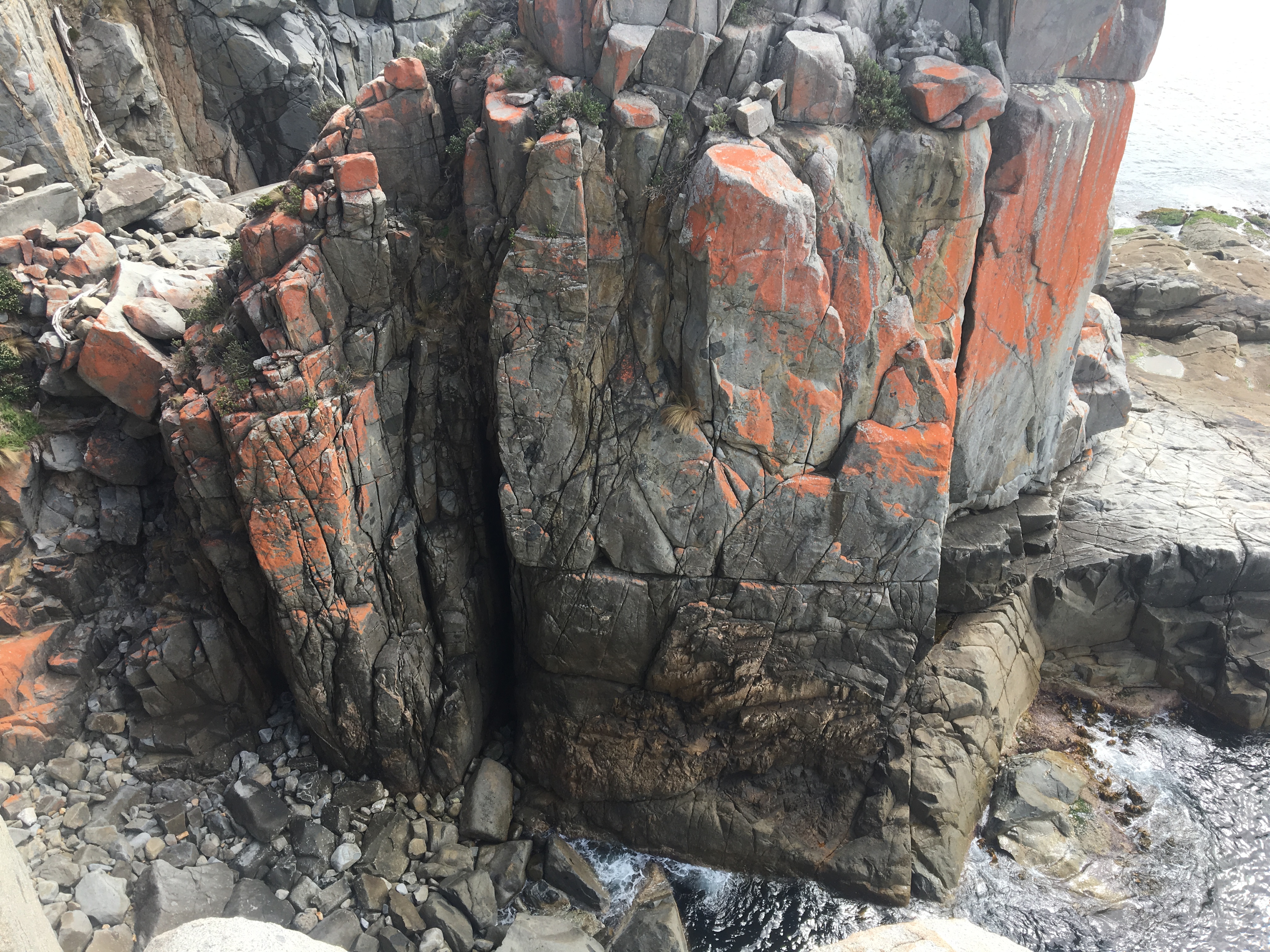
Island Zawn - South Face
On the south side of the island. At sealevel, were the big smooth boulders start, is a narrow buttress with aplite rock for the first few moves. Iisa goes up the center. A little gem.
B. and P. Baxter, Jul 2002.
Climb the gaping off width on the southern side of Island Zawn.
Kim Robinson, John Forcett 1997
Island Zawn - East Face
These next few routes are on the seaward faces of the island. To access them, either scramble around the south side of the island (preferred approach in low swell) or come in from behind up the easy angled slab and abseil into them.
Climb the clean crack on the left hand side of the east face.
Kim Robinson, John Forcett 1997.
Finishes on the obvious orange slab on the front left hand side of the Island Zawn buttress. Climb the short steep crack which continues up through the orange slab.
Jim Duff, Robert McMahon, 1980.
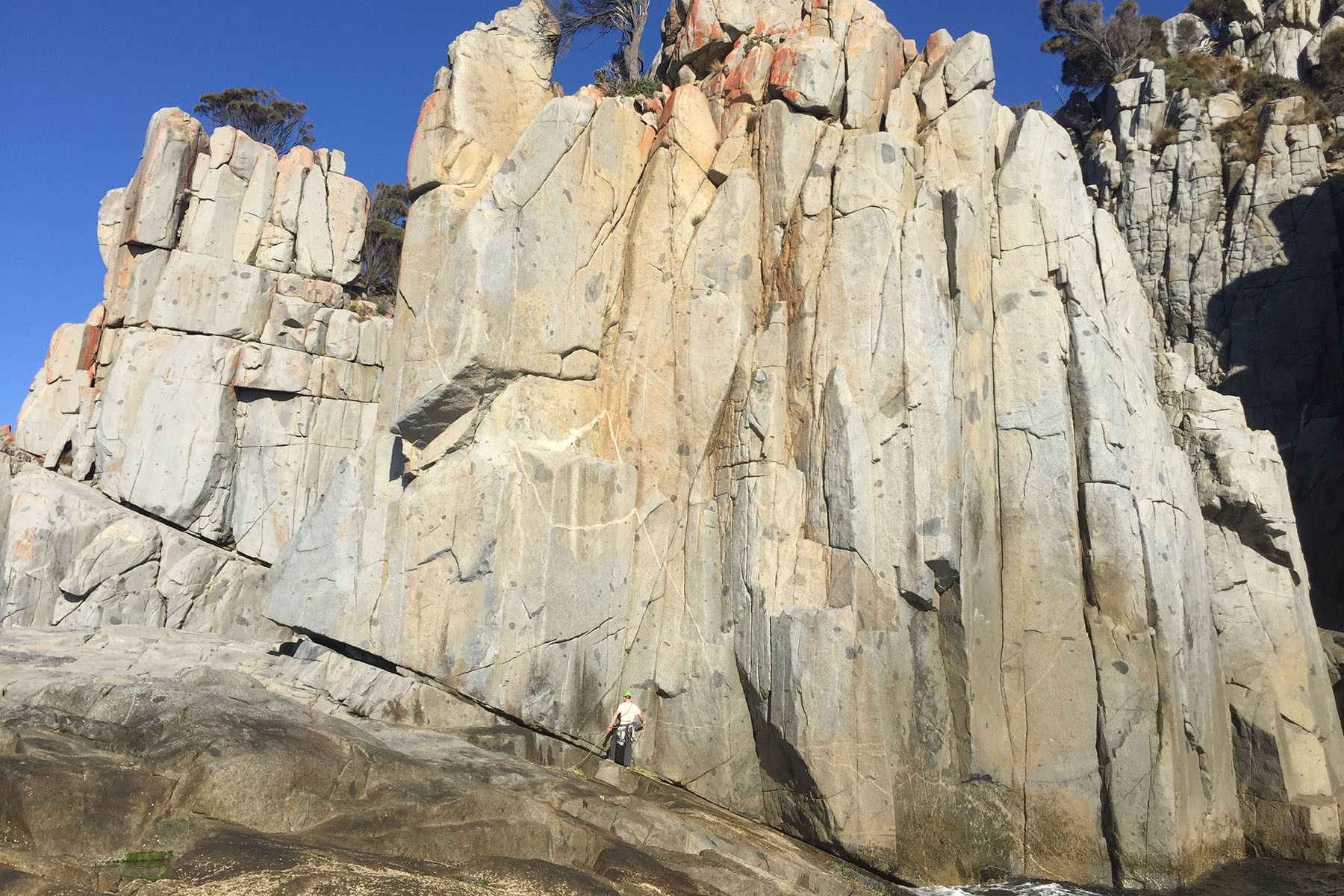
Island Zawn - East Face
Lovely little moderate to warm up on. Start up easy crack on Punctam Equans but continue straight up to first bolt. Climb past first bolt then traverse under the second bolt out to the arete. Climb the lovely feature past two more bolts. A few wires and cams required to get to the first bolt. A #1 and #2 camalot can be used in the break for an anchor five metres back from the top of the route. Walk off.
Hannah Vasiliades and Simon Bischoff August 2020
On the left of the east face as for Kepler. Climb a short line for 4m to gain the left side of the roof, traverse right under the roof and onto the large ledge. Finish by climbing the corner crack at the back of the ledge. Beware of the loose hold on the traverse.
R.McMahon, P.Cover, 1980.
Climb the technical groove on the arête to the left of 'Boris'. Short and under graded.
Kim Robinson, John Forcett 1997
The very clean short corner in the middle of the buttress. Laying away and jamming onto the large ledge. Finish up Punctam Equans.
B.Yeltsin, 1980.
Halfway between the corner and the edge of the buttress. Up a short left leaning corner and straight up the steep face and shallow corner crack above to a step right and then up an easy crack back to the left to finish.
R.McMahon, P.Cover, 1980.
The obvious line just to the right of Astronomia Nova. Up the crack in the corner up a series of steps. This line and Astronomia Nova have a common last 5m.
Jim Duff, Robert McMahon, 1980.
The following 4 routes require rapping in to sea-level and building a hanging belay
Access: Rap to hanging belay at the base of bottomless corner, 3m left of Swash.
Up initial corner, traverse right under the roof and pull into splitter crack bisecting the face. Thin jamming leads to a short technical corner to finish.
Danny Hazell, Chris Arvier July 2020
Around the corner to the right of the east face is a very impressive corner which starts in the sea. Sustained laybacking up the incredible line.
Simon Parsons, Phil Bigg, Doug Fife, 1982.
Fun jamming up the crack system right of Swash.
Step R from Aquaphobia belay and up the clean featured wall
Chris Arvier, Rosie Fuggle September 2025
There are two routes on the short face further to the right. They are short and can be reached by abseiling or by coming in from the north.
Start in the wee chasm 6m left of the northernmost part of the island. Massive step across from sloping buttress then up diagonal left leaning crack.
B.Maddison, R.McMahon, C.Rathbone, 1981.
Just below and in front of the boulder at the right hand extremity of the island cliff.
Robert McMahon, P.Cover, 1980.
Outer Zawn
This is the promontory that protrudes east between Big Zawn and Island Zawn. At the end of this promontory is a large clean wall high up with a zig zag groove on its right (HB) and a bottomless crack on its left. Access is facilitated by abseiling from the u anchors to the sloping terrace 10m above the sea.
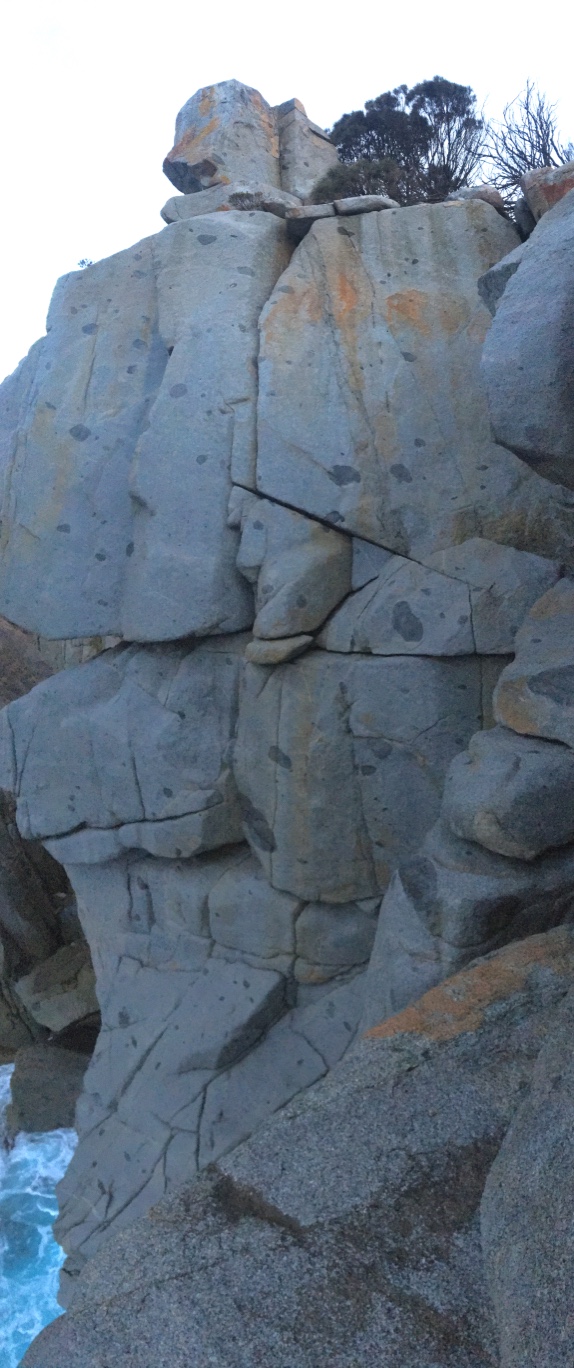
On the east face, around the blocky arete right of Pipeline. Beautiful rock. The stricking narrow off-width up the middle of the face. One the best off-widths at freycinet.
Marcel and Hamish Jackson and Steve Bray, late nineties.
Climb the crack to the right of the wall to a small ledge. From here head out left past three bolts. Eventually the arête is reached after a series of moves very challenging to people with a reach of less than 190cm (may be slightly easier if you've more reach or impossible if you've less). Continue up arete to the top. Gear is three u-bolts and some medium cams.
Nick Hancock and a woefully short Andrew Bissett, Aug 2001.
Big Zawn
Access to the start of these climbs is normally by traversing in from sealevel from the ramp at the base of Lassie's Wall, but it isn't hard to descend at the other end.
The next few climbs are on the south side of Big Zawn. They generally face north. The descriptions start at the detatched buttress and work to the right towards the back of the Zawn.
On the detatched pillar opposite Afternoon Shift. Ascend to the top of pillar. Solo down on the sea side of the pillar (crux).
Ben Maddison, Robert McMahon, 1977.
The widening crack right opposite the back of the detatched pillar. Unpleasant.
Jim Duff, Robert McMahon, 1980.
Start at the crack just right of the aplite seam on the semi-detatched buttress about 25m right of the detatched buttress. Climb straight up the crack to the top. There is an exciting grade 18 variant which moves right at two thirds height.
Robert McMahon, Ben Maddison, 1976.
The obvious line just above the finish of Bradwalda.
Robert McMahon, Ben Maddison, 1976.
Start 25m up the hill to the left of the finish of Bradwalda at the foot of the steep handcrack. Climb through the bulge and up the crack above. When this stops climb the slab above.
Garn Cooper, Robert McMahon, Jul 1990.
A variant start to Waterline. The continuation of the diagonal line down to the left.
Robert McMahon, K.Bischoff, 1980.
Located on the left hand end of the wall that faces the land. The line is indicated by a steep slab near the top of the cliff which is split by a good looking crack. Start directly below this, and wander up to gain the crack which is pleasant enough but too short to really compensate for the rest of the climb.
Robert McMahon, Ben Maddison, 1980.
The next few routes are on the other side of the Zawn and generally face southeast.
Start 5m left of Penetration and 10m left of the back of the zawn, under the overhanging blocks. Up to green sling at 10m then up runout slab above.
Ben Maddison, Robert Mcahon, 1979.
Deep in the gulch. The prow left of Crime of Passion.
Robert McMahon, Jim Duff, 1980.
Located on the opposite wall to Waterline, the back wall of the zawn. It takes the line through the right hand end of the roof at half height. The rock is a bit woeful.
Ben Maddison, S.Baker, 1980.
As you traverse into Big Zawn you cross a narrow gap where the sea washes in, to get onto a large boulder. This climb starts from the top of the boulder. The pitons used as protection on the first ascent are no longer present. Bridge and face climb up the thin crack and continue up the ever steepening wall and into a small V-ledge and then up a couple of steps to finish.
Robert McMahon, 1989.
Just right of the gap. Take the right hand of two possible cracks to gain the overhanging hand cracks. Up this and the face above on the left to finish.
Nick Deka, Di Batten, Doug Bruce, Pete Steane, 1989.
The huge gulch. Nice at the top.
Robert McMahon, Jim Duff, 1980.
A few metres right of Fast Lane. Up the face and crack on the left and then straight up the crack and over some choss to finish.
Roxanne Wells, Nick Deka, Robert McMahon, 1989.