thesarvo

Gordon Gorge

15 Routes0510<1616-1920-2425+TradSport

    Acknowledgement

    By Hamish Jackson

    Introduction

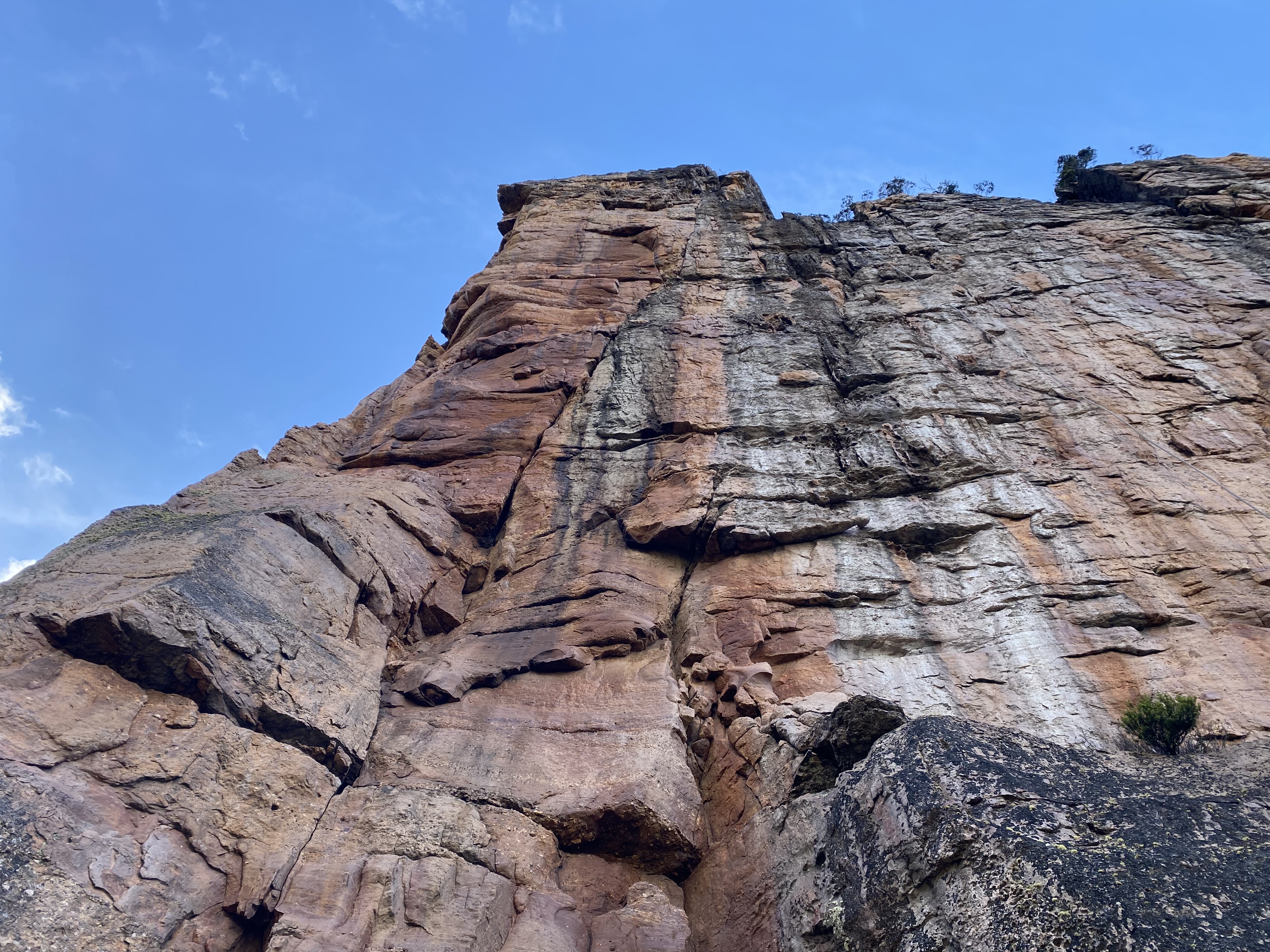
    Spectacular cliffs line both sides of the upper Gordon gorge, where the Gordan River cuts between the Denison Range and The Thumbs, running it’s course from Lake Rhona to Lake Gordon. The section of cliff dropping into the gorge from the ‘Packers spur’ at the northern end of the Thumbs consists of very good quality rock for climbing. The rock type is known as Siliclastic sandstone conglomerate (Owen group and Gordon group) - a rare rock type for Tasmania, that is in many sections virtually identical to the rock at Arapiles. The rock is very different to the rock at the nearby Adamsfield boulders, with most of the cliff having very few if any pebbles. The rock at the Cliffs of Insanity is diferent again, with a more conglomerite-quartzite in feel, but similarly steep!

    It is important to emphasise from the start that this cliff is a very remote and totally wild package - even by Tasmanian standards - and it features exposed and overhanging climbs. Backing off such an overhanging route could be rather challenging and costly due to left gear! Furthermore, there is no track here - so significant experience in off track navigation and path finding are needed. The approach is flat-ish, but somewhat arduous. Overall, the cliff is only suitable for very experienced trad climbers with associated bushwalking experience. the editor recommends potential parties 'check their credentials' to reduce the chance of a taspol rescue - for example it would be best to tackle some more accessible wilderness cliffs before coming here, such the sentinels, the needles, the Geryon traverse.

    The area lies within the TWWHA and outside the listed hand drill exception areas, so this means bolting without a permit is against the law. Happily, the climbing here is unique for Tasmania as the rock accepts a lot of good gear even on relatively improbable sections of face, and is typically over-hanging with climbing easily than expected. This means solid trad routes have been approachable ground up, on sight with no cleaning, even through fairly blank looking face climbing sections! The fact the climbs are steep does mean a confident leader approach is required as it gets pretty pumpy placing unnecessary, closely spaced gear (potential falls are typically very clean and safe). Another unique aspect for Tassie climbing is the size of the cliffs situated above the river, making for remarkably atmospheric gorge climbing and lovely camping with swims etc during the summer months.

    History

    These cliffs have been noticed from afar by many kayakers and bushwalkers and probably some climbers over the years. They were first noticed by the Jackson family after they appeared in a ‘Tasmania from the Air’ Calendar in the 1980s. A trip to the summit of Clear Hill and then to the nearby Cliffs of Insanity confirmed the significant climbing potential. Paddlers Peter Rand and Simon Jarman had separately encouraged Hamish to explore the area and shared some inspiring, yet also intimidating, photos of the cliffs from the river. Scaling the cliffs on natural gear looked somewhat improbable from the initial photos.

    Bushwalking notes made pre-2019 report that the Gorge rim was always reasonably easily accessed via the Clear Hill plains, and this route became even easier after the 2019 Gell River fires. The first routes were established in early 2024 by Hamish Jackson and Jamie Spencer on their first trip to the Gorge.

    Access

    The Gorge rim camp is reachable in about six hours from Hobart – 2.5 hours drive and 3 hours walk. The walk is likely to take longer on your first visit. Weekend trips with a Friday afternoon start can be quite productive if you camp on the rim and get water from the last creek crossing.

    Road Access:
    Access is via Strathgordon 'SW' road, then right onto Clear Hill Road, then right again onto the Morley track, which branches off the Clear Hill Road a few km past Adamsfield cliff parking.
    The Morley track is gated about 20-50m after the turn off to the track. The gate key can be obtained from the Mt Field Parks office. The key must be booked online, and collected en route. In late 2026 staff have requested in hours pick up. The key can be dropped into an after hours return box on the way home.

    On most trips, we have not got the key and have just ridden a bike for the 2km from the gate to the start of the walk.

    From the gate, follow the 2WD access road past the 2 huts to the river crossing. With a bike or AWD/4WD, ford the river (nb pedestrian log crossing 30m downstream from ford) and continue east past the next hut/picnic shelter on the left and along to the start of the walk (see GPS and map points). The start of the walk is about 1km past the river, or 2km total from the gate, so it could also be walked if you don't have a bike or a key.

    Walking Route:
    There are walkers' pads along clear hill plains (see Abels books), and also historic remnants of the old mining horse 'packing track' that went from Adamsfield to Maydena, which surprisingly went all the way around the northern spur of the Thumbs. However, these tracks are marginal and intermittent, so it is best to think of the cliff access as a pure off-track walking experience, and so make sure you have the necessary route-finding skills. It is hard to get lost in day light hours as the plains are bounded by a range on each side, but it is easy to get into slow terrain if you don't look at the maps properly.
    The best routes DO NOT go straight along the middle of plains (too clumpy), but travel on the far eastern side of the plains, on the flanks of the thumbs, where the vegetation is sparse. you should expect to encounter rough creek crossings.
    Some Key GPS points are included below, and a rough route is shown on the map - these help avoid the main scrub patches.

    Base of cliff:
    The best descent route to the WW cliff base starts at the middle of the saddle, then goes diagonally down right for 50m, crossing the scree low down and moving over to the right/eastern edge of the gully. Continue on this RH side down a convenient wombat track.

    Camping

    The most accessible camping is found on top of the Gorge rim, about 200m west of 'Wild West Buttress', with water found from the creek 5 min back south along the plains. An alternative camp otpion is to decend down the gorge, but the last section of thsis from the cliff base to the river are very rough and strewn with fallen trees.

    Ethics and environment

    Ethics:
    The area lies within the TWWHA and outside the listed hand drill exception areas, so this means bolting without a permit is against the law. Given the wilderness values here are striking and the rock is particularly well suited to trad climbing, the discovery teams propose that in the medium term that this area of the gorge remains a trad area and no permit applications be made. So far a leave no trace style has been readily achievable due to easy walk offs. If you visit the GG and have a different vision for the style that would suit this area, then please contact Crag Steward and the CCT to discuss your views and possible solutions so that climbing access for the whole of TWWHA is considered properly and well managed.


    Environment:
    Please observe minimal impact camping etiquette - you are in the Tasmanian Wilderness World Heritage Area.

    Birds: 🦅 this is a new cliff that has been rarely visited by climbers, or other users/biologists, so it is possible undocumented nest sites are hidden here. It is suitable habitat for Peregrine falcons, so please keep an eye out for possible nest-sites and avoid these July-Jan.

    Climbs with likely evidence of peregrines hunting are marked with this symbol: 🦅

    The TWWHA is remarkable for some of the oldest Aboriginal heritage sites in Tasmania. AHT have provided a desktop assessment indicating no recorded sites in the vinicity of this climbing area, but please be mindful of unexpected discovery plans (see Code of Conduct). There is well recorded settler heritage in the Adamsfield area, including old mining equipment and huts. Use of these huts requires a booking from Parks.

    Access details

    Morley Track, Parking, and rough walking route (no track)
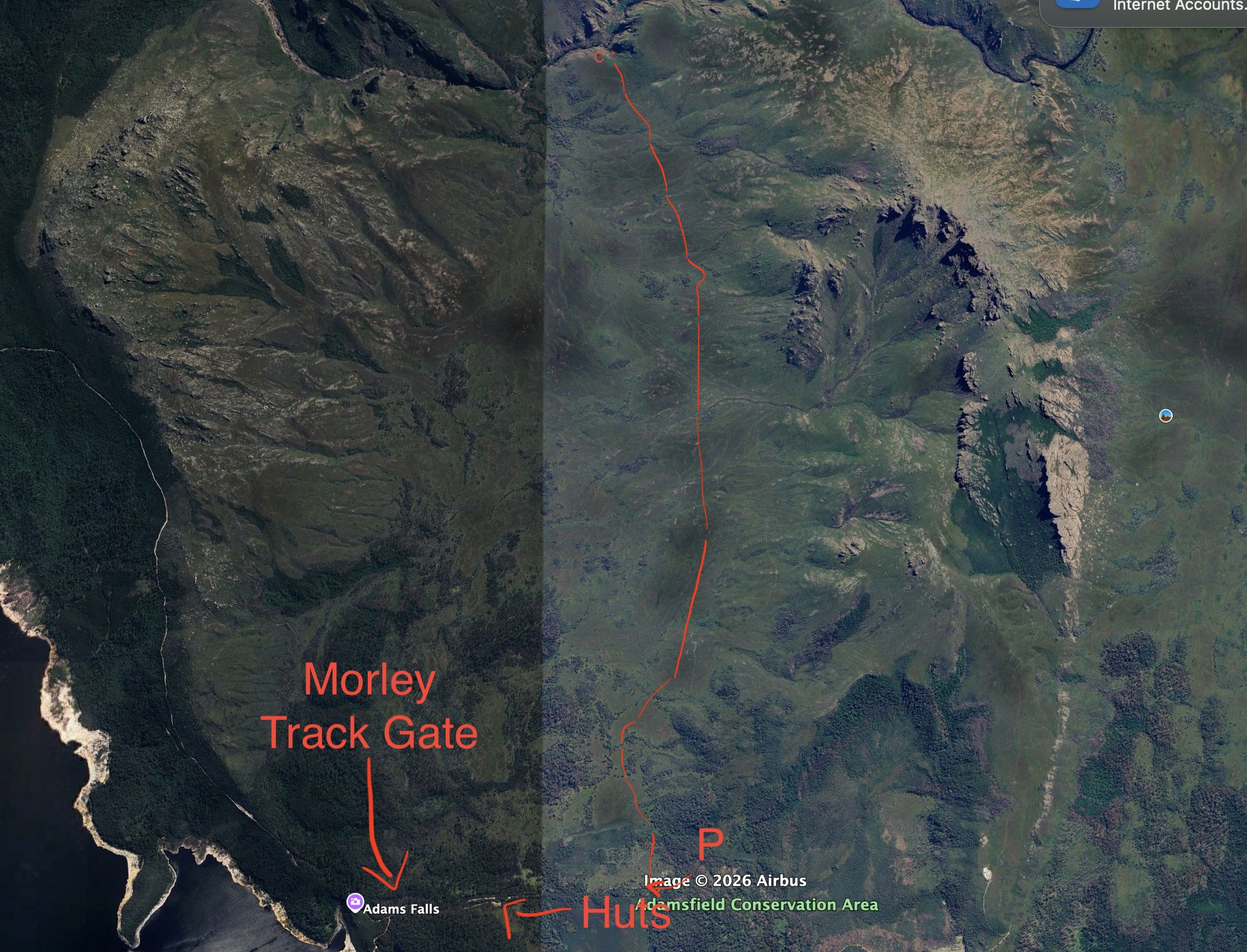
    morley track and huts and parking2.jpg

    Key GPS points:

    Parking spot/start of walk
    42 43 09.18S 146 19 29.17E

    First scrub band avoided:
    42 42 57.08"S 146 19 29.69E

    Convenient swimming pool on Abel creek
    42 41 11.87S 146 19 46.68E

    Travel above last tree band:
    42 40 38.83S 146 19 49.79E

    Top camp
    42 39 39.28S 146 19 12.85E

    GPS

    Buttress access topo and top camp
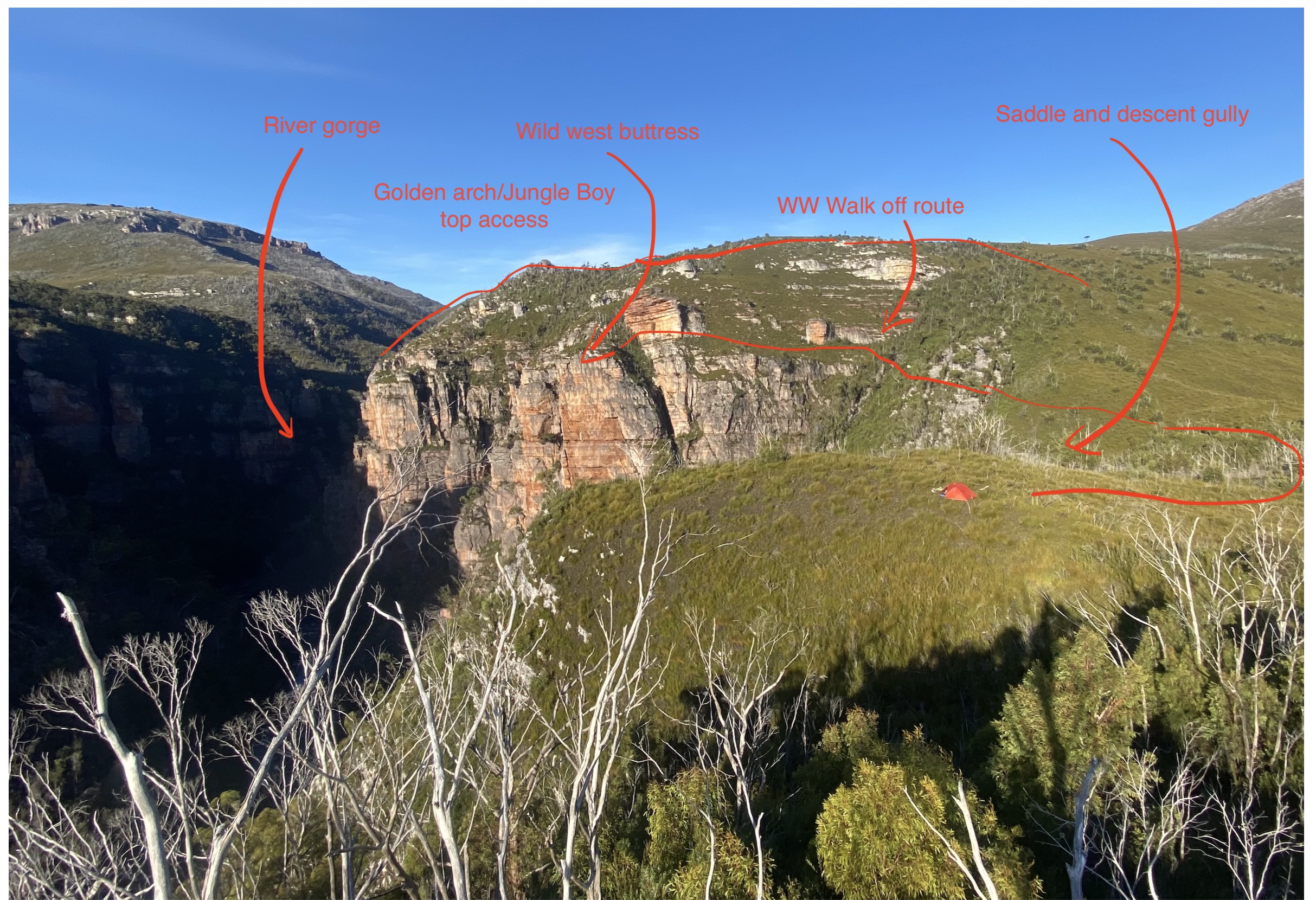
    The Golden Arch Buttress

    Jungle Boy
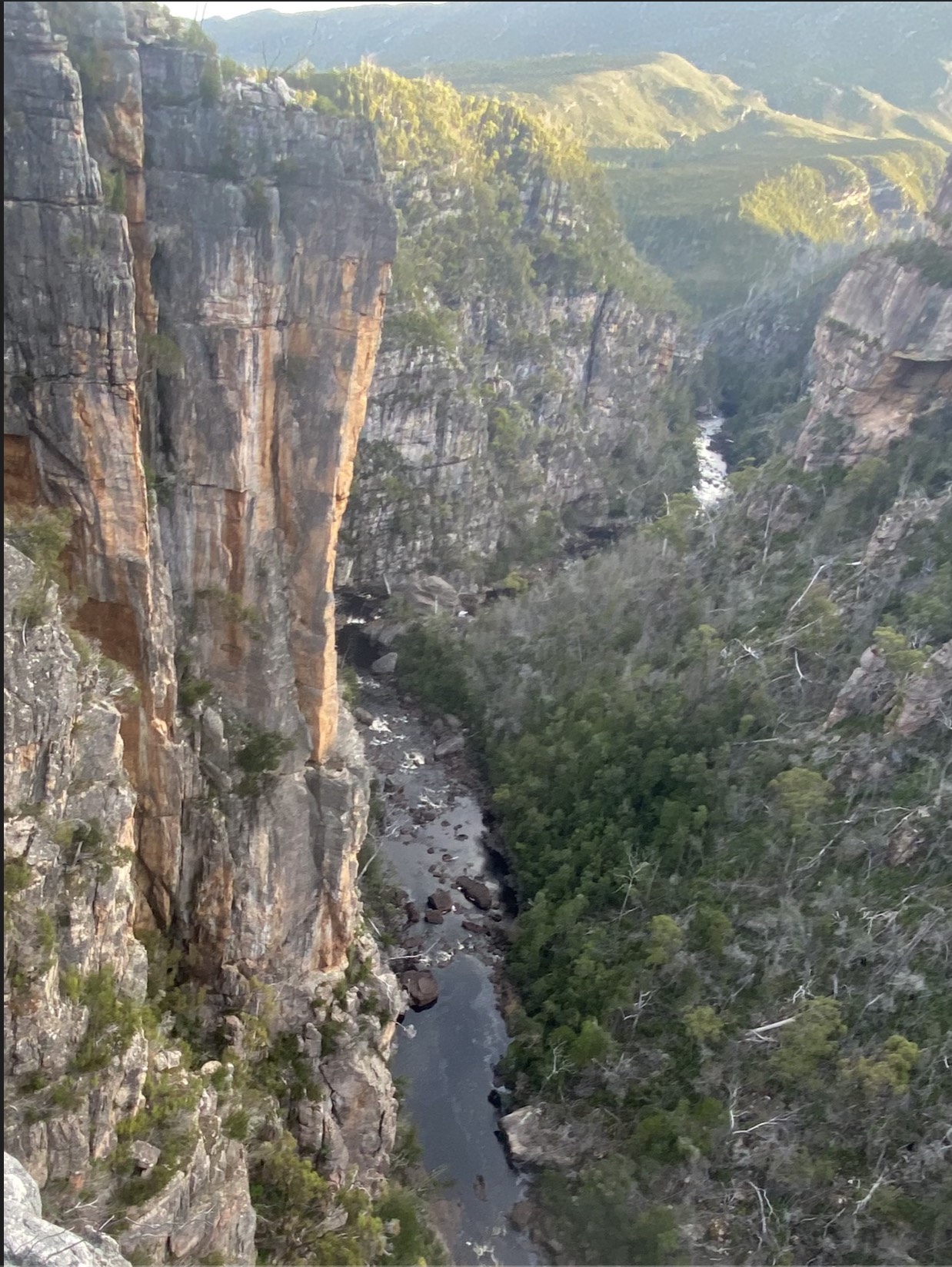
    IMG_4270.jpeg12
    1.

    Jungle Boy

    ★★★75m23
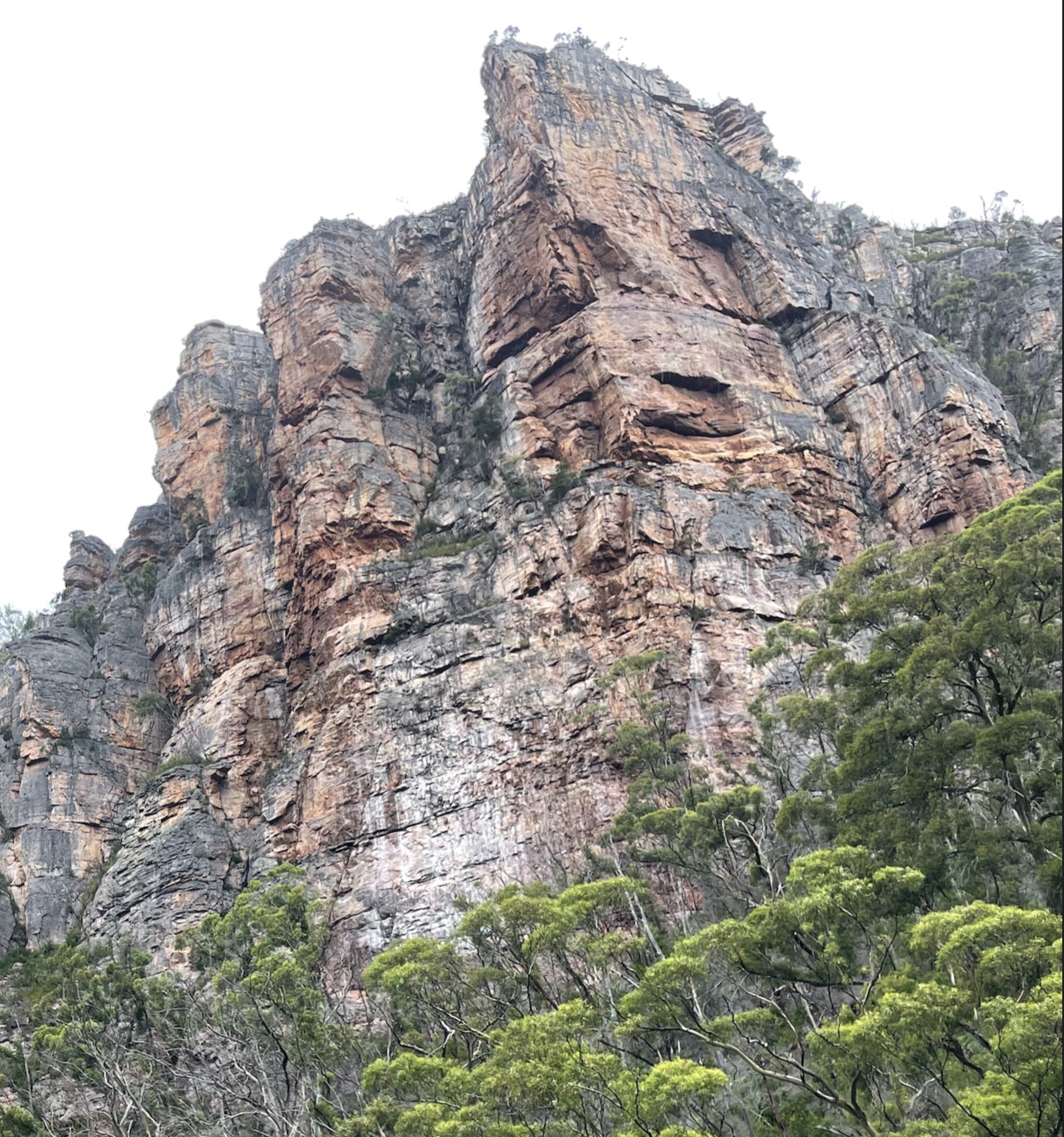
    A strikingly aesthetic line. This climb ascends the overhanging double arete that towers over the river. Easier than it looks from afar (like everything at the GG). Named in memory of Peter Jackson (aka Jungle Boy in the Arapiles golden days).Access: FA team accessed the climb from above with a 70m abseil, which is easiest if you are camping on top as the walk in access is relatively quick and easy. The lowest tier, straight above the river (50m) has therefore not been climbed; the rock hop up the river to the base would take a bit of effort depending on river levels.1. 20m 18Start on the large bushy ledge atop the lowest tier. Climb the crack just right of arete, then on arete, to top of arete and large large.2. 18m 18Climb corner crack 4m right of arete to 12m, then traverse on horizontal crack to arete proper, and climb this for 5m (do not go on to upper ledge as this creates a high factor run out on pitch 3).3.35m 22/23 (pumpy). A sustained pitch, slightly run-out in places, but good gear and clean falls. Up double arete and face between, initially on left, then on right and up to roof. Pass roof on R, then step left onto lip and up crack that splits the final sharp arete. Mind blowing position and good climbing throughout.Gear: single rack cams 0.1-3, but triples of 0.2 to 0.4 (some offsets handy), plus wires.

    H Jackson and Jem Clemens Jan 2025

    2.

    Cuggi Crack

    ★★45m23

    Worth a look if you're into steep cracks 4 hours from the road.
    Beautiful R leaning weakness up face R of Jungle Boy.

    Fix rope from bushes/tree and rap to highest big ledge. Anchor is a long way back from edge, long cord or 60m rope useful.

    Up corner R of arete (as per JB p2), then follow diagonal crack into steep terrain. Sneak a rest on some jugs and take pumpy sequence to pencil thin seam and beyond. Traverse up and R to reach ledge and corner (possible belay), and climb face just R of corner or jug fixed line to top.

    Carl Hansen, Matt Miller Mar 2026

    West of Wild West
    3.

    The Bushranger

    ★★145m21
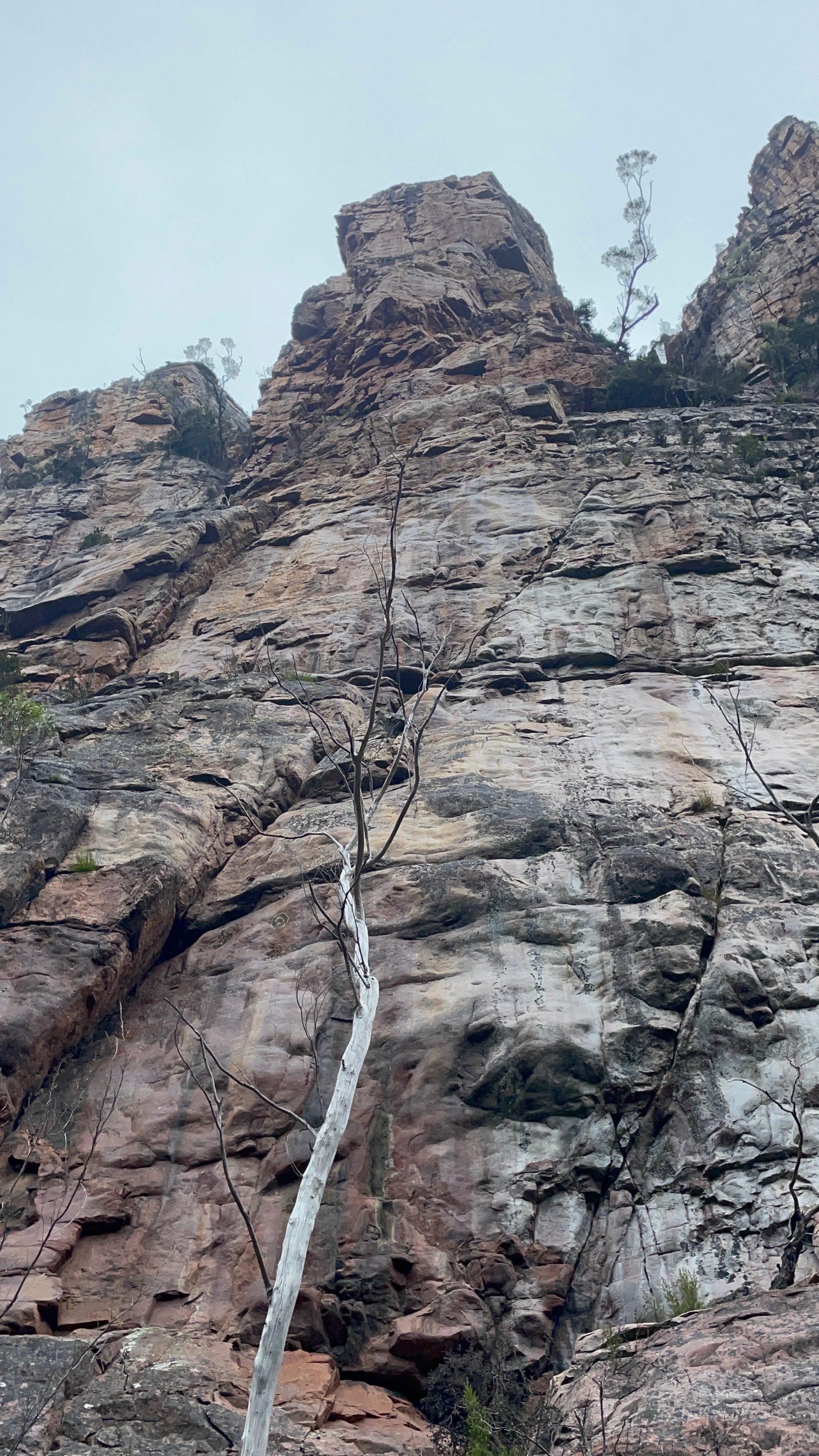
    1.45m (17) Access pitch: start in chimney on right for 5 metres then up grassy right trending ramp until thrutchy crack for 15m keep going past first ledge to top of block and big ledge with dead tree. There might be a better way up face?2.20m (18) On right side of ledge follow steep left trending flake with good gear then blast through head wall3.30m (21) Up bomber overhanging splitter crack on right with bouldery start. At top of crack hand traverse left until feet run out, and then yep you’ve got to squeeze in there and stealthily slither across. Wild. Up average crack at end to ledge. A direct variant also looks promising but harder (:4.40m (21) An amazing pitch. Up obvious weakness on orange overhanging rock with massive jugs and right trending flake to stance. Hand traverse right and blast up onto the arete via some honeycomb and a ridiculously exposed "stance" and then just keep holding on until the next ledge.5.10m (15-19) A delicious platter of chicken heads, sample to your hearts delight, easier to hard left to right.

    A. Wylie, M. Watkins, E. Henschell, Sept 2026
    gunslinger line.jpg54🦅
    4.

    East of the Sun West of the Moon

    ★★130m18
    1. 10m 5solo or lead up to starting ledge from the right, as for gunslinger2. 45m18. Up Gunslinger for 15m, then left to steep corner, then up this to ledge beneath steep wall.3. 50m 16Up weakness in steep wall about 3m right of crack (for 5m), then traverse left across crack and up to ledge on arete at 10m. Optional belay here. Or proceed up lovely easier corner for 20m above to ledge beneath small overhang.4. 24m 18+A remarkably good pitch, and quite unique in style! Place cams and heel hook through overhang then ascend the overhanging hand crack just R of arete, stepping left to rest on the occasional balancey stances that appear on the arete (weird). Near overlap/roof thing step R, up for a few m, then back left to hanging arete. Belay on top of buttress.Either escape via pitch 5 or scramble off left (unlikely, but doable)5. 15m 17Climb steep crack immediately adjacent the back on the summit block, and continue to scramble up 5m further to belay off a few shrubs.

    H Jackson, M Blowers and S Joseph Jan 2026.

    5.

    Gunslinger

    ★★★125m20
    Another remarkable climb, with every pitch a winner.1. 10m 5Scramble/solo up to the ledge with a small tree at the base of the steep right-facing corner.2. 35m 20Swagger your way up this super fun and classy pitch. Climb the steep R-facing corner to the ledge. Climb the beautiful R diagonal finger crack, which gradually gets harder and steeper, then as it ends, go up the wall above to belay on a small ledge just below the overhang and corner.3. 50m 17A lengthy and complex pitch that could be broken down into two. Up corner and overhang, then left and up towards an overhanging overlap, which is passed on the RHS weakness, then up to the ledge at 20m. Continue up the wildly overhanging corner/face feature above to reach the ledge at the base of the upper tier.4. 30m 18Step left from the belay onto the pedestal to gain the main crack line that splits the imposing steep wall. Continue up this to the top. A very impressive pitch for the grade.

    Jamie Spencer (1,2,4) and H Jackson (3) May 2025

    North-east face of WW Buttress 🦅

    6.

    Tenderfoot

    ★★50m22🦅
    Probably the steepest trad line for the grade in Tasmania. Takes the most obvious central line up the steep wall left of TC pitch 3. A 3-star pitch waiting for a proper start.Access:1) either abseil fixed line from top of buttress to ledge 15m down, then re-fix here to continue down steep wall either placing some gear en route to keep you in to land of the ledge (as on FA), or aim to lower down 5m east/climbers left into tree. climbing back to ledge via tree.2) or: climb first two pitches of Tiger Country to large ledge and scrample east/climbers left to base of climb.Start on large ledge about 8m left of arete.1. 30m 22Outstanding rock. Reach up past cave to short left facing corner that goes for 1m, campus left 1m on jugs, then up well protected slightly R trending weakness that is crazy steep via many jugs. Pumpy to place gear.2. 15m 18Up to top via easy steep crack mid wall above.Gear: wires from 4 RP, double cams from 0.2 to 1, single 2 and 3.

    Jem Clemens and H. Jackson Jan 2025

    Wild West Buttress (aka Tyger face)
    7.

    Tyger Country

    ★★★120m21/23
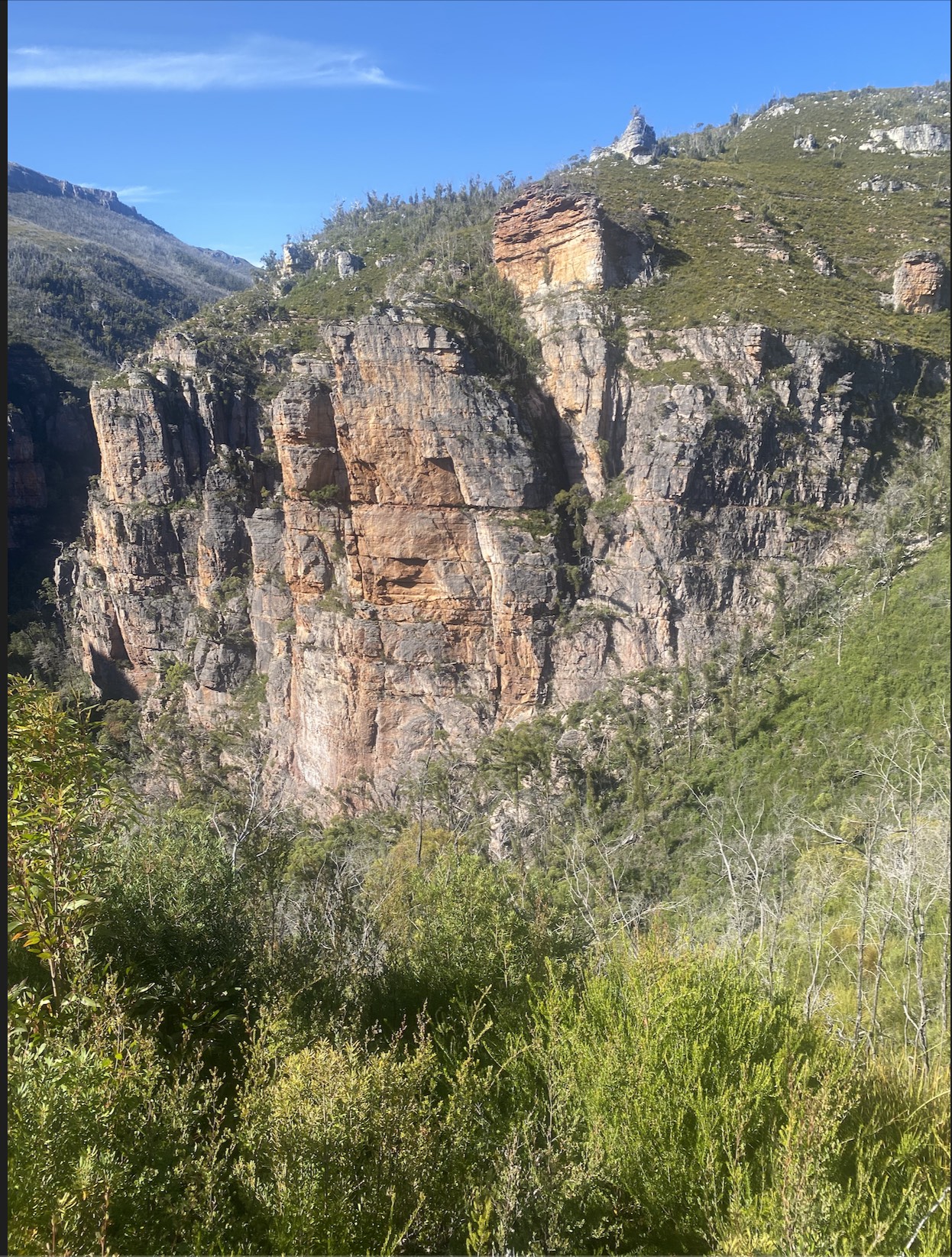
    Climbs the overhanging arete the whole way without a run out! Every pitch is lovely. The first route at the GG and this set a high benchmark for quality. .Start at faint crack and groove 2m left of main arete (this start is 10m left and down hill from obvious crack (Endling - that is 2m right of the main arete).1. 50m 20Climb faint crack and steepening groove/face (crux) to 30m, then right to arete and up this on easier ground via various short cracks to reach large comfortable ledge at 50m.2. 25m 21Climb steep corner with thin crack until roof at 15 m, exciting hand traverse right to arete, then step back left above roof and up steep flakes to major ledge.3a. 25m 21The original - outrageous but very well protected. Hard to overstate the quality of this pitch. Ascend steep corner 2m right of the hanging arete for 4m (place high piece), then traverse left early across scoopy weakness which leads up to arete. Up arete for 5m then back right up to the RH steep crack to 'the diving board' ledge.4. 20m 15More easily to top via right diagonal that leads through the ‘hole’ feature 5m right of arete at top.Alternative: 3b. 30m 23. "Airy interlude" by A Donoghue and K Wright Jan 2025 is also outstanding climbing with tricky but adequate gear around 5-10m. Climb the next steep corner 2m right of original, which carves a strong line up left through a wild overlap. Climb 5m more above rooflet then step left into original line 3m below the diving board belay ledge.

    H Jackson and J Spencer Feb 2024

    8.

    The Endling

    ★★125m20/21
    Named after the mythical 'last tyger' in Tasmania who lived well into the modern era, rather than the last captured tyger filmed at the Hobart zoo, who was trapped by an Adamsfield bushman. Again - a 3 star route with every pitch a winner, down starred due to its illustrious neighbours and the slightly sketchy crux on pitch 2.Takes the crack just right of the arete to the midway ledge, then cuts an unlikely rightward diagonal line over blank-ish face terrain to the top right of the face. Double ropes essential for pitch 2.1.50m 19Climb 8 m up slightly loose and sparsely protected wall (easy) to reach the main crack line. Up diverse crack for 35m to ledge, then up next crack above to major ledge.2.25m 20Double ropes essential, occasionally spaced gear (safe). Up Tyger country pitch 2 for 8m (ie half way up to roof only), then traverse right to pedestal on arete. Block up any rope catching cracks here. Traverse gingerly 3m right along horizontal until face holds and a small wire in otherwise blank face allows for a balancy sequence up (crux) to next horizontal crack line. Head right and up flake cracks more easily, then back up and left through another blank-ish face (tricky) to major horizontal. Belay just left of the narrowest point of ledge.3. 50m 20/21A great pitch (that could be readily split in 2). Balancy move up onto obtuse arete, then face climb up and right in an unlikely rising traverse on increasing steep terrain, crossing the crack line of Tyger Tayl 2m above the lip of the roof on that climb, up another 3m to good ledge (belay possible, then following 20m would 16). 5m right to cracks, up this for 10m to base of left leading diagonal crack, but ignore this and continue up right through steep stuff to top right arete of face then easy scramble to top of buttress. Belay from gear 10m back up hillside.

    H Jackson, J Spencer and Toby Watkins May 2025

    9.

    Eye of the Tyger

    ★★★110m23
    A direct line up the middle of buttress through some outrageous terrain. Pitch 3 was abseil inspected prior to a FA.1.35m 17An access pitch with numerous sections of good climbing between small ledges. Start 10m right of the Endling’s major crack line, below a vertical wall cut by ramps and horizontals and weave up through a series of diagonal cracks through the steepenings above to reach a ledge 10m below the central roof (RHS). *2. 30m 20Up to roof via fun steep flakes, then hand-traverse and swing right under roof to small ledge. Climb diagonally back left above roof through blank-ish terrain with amazing cams every 2-3m until the major ledge is reached at it's narrowest point. belay (as for Endling).3. 45m 23Climb the imposing steep wall above the belay as follows: ascend the small grey nose, then trend slightly left up following intermittent flakes through the unlikely golden wall above until a short grey slab is reached at the end of most overhanging section. Step right of slab 1m, then again weave up the central line of intermittent flakes above to the top of buttress where the tallest summit block is poised (save a 2, 3 and 0.3 cam for this upper section). This is the best piece of climbing on this upper wall.Gear: double rack from 0.2 to 2, single 3, triples of 0.2 and 0.3 helpful, plus wires.

    H Jackson, A Wylie, T Watkins 2026.

    10.

    Tyger Tayl

    ★★★105m22/23
    'cos tassie tyger tails were straight and stiff!Tackles the fine diagonal crack that left cuts across the WW face. Rather steep, but very well protected.Start: 4m left of chimney (‘Corinna’).1.40m 19Up easy walls and intermittent cracks to 20m, then trend right up through lovely overhanging, pocketed rock to base of diagonal crack (cuts back up and left). Crank up to this (crux), then up crack 5m to belay ledge.2. 15m 16Continue up diagonal crack.3. 25m 22/23Up beautiful diagonal crack (22 crux), through overlap, then various minor variations exist; either continue straight up diagonal crack to link directly into pitch 4 (hardest), or step right to belay either 4m or 6m past overlap (all good options, around same grade).4. 25m 18Traverse left on rail, then continue up dianonal weakness to top exit at same point as TC.4b. 30m 19/20alt finish, better and more sustained- traverse 3m left on rail, then straight up face as per Eye of the Tyger - to highest point on the wall.

    H Jackson and N Watkins March 2025

    11.

    Corinna

    ★100m17
    The major corner crack line on the right of the face reportedly climbs very well - face and corner style.1. 30m 15Up short chimney leading to obvious corner. Continue up corner to ledge.2. 30m 15Continue up corner to large ledge.3. 15m 17Up steep corner, then at about 4-5 m above belay traverse right across steep face and around arete. Good gear and solid rock. Then up 3m to stance and belay. Roof at apex of corner remains to be climbed.4. 40m 16Superb climbing and position. Up cracks moving slightly left aiming for middle of cave below the top. Traverse left in cave and out lovely finger crack to top. Belay at top with small cams and a sling.

    Marls and Nic Watkins May 2025

    12.

    Corinna Direct

    ★★100m18
    The direct line through the obvious roof on pitch 3 offers good climbing with wicked exposure. Though the first 2 pitches of this climb are not especially inspiring, it still offers a full GG experience with the river roaring far below.1. 30m 15As for corinna2. 30m 15As for corinna3. 20m 17Up corner to the ominous roof crack, arrange gear and traverse R to tackle the lip. Continue up to belay on small ledge.4. 25m 16Straight up lovely wall to major horizontal line and finish as per original

    Matt Miller, Carl Hansen Jan 2026

    Tiny Tyger Buttress
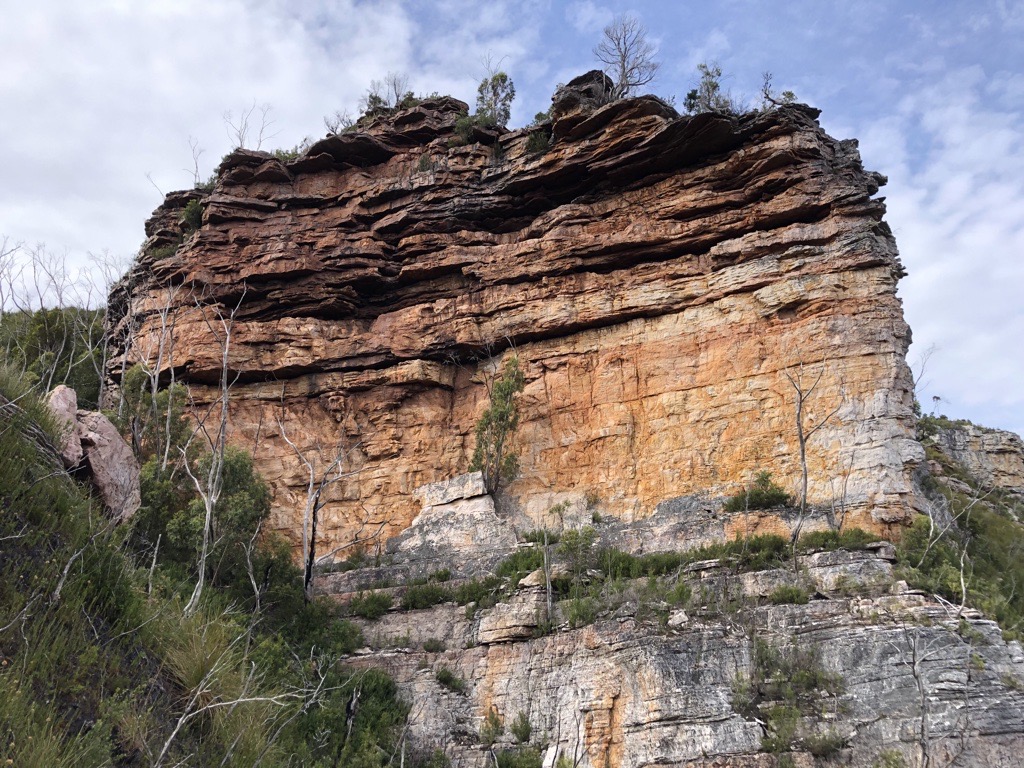
    Image (2).jfif1314
    13.

    Catnip

    ★25m17

    Aim for the big scoop feature. Slightly left on trippy black circle rock then through little roof to a stance. Up through the wormhole via wild karate kick and then up to top and belay on left on nice ledge with gear.

    Alex Wylie, Kate Eckhardt April 2026

    14.

    Roaring Kitty

    ★★25m21

    The jugs are bigger than the roof! Up the crack feature to begin on bomber rock, through the three roofs with increasing size and difficulty. After pulling onto the headwall of the third biggest roof, traverse left via a little cell and finish next to unstable tree. Walk 5m back to a little cave with some gear in the back to use as anchor.

    Alex Wylie, Piret May, May 2026

    Taby Cat Buttress

    15.

    Toby's climb

    ★15m19

    Ascends the attractive orange buttress above to the walk off from WW.

    A pumpy little number but with more friable rock than main routes. Start just left of the main overhang. Climb steeply up, initially straight then trending right. The gear gets better as you go

    Toby Watkins, N and M Watkins May 2025